Showing posts with label Egypt. Show all posts

Sunday, November 3, 2013


A Commentary on


The Jews of Egypt :Yesterday and Today


By; Rami Mangoubi Ph.D
In “The Jews of Egypt” (Elaph, December 22, 2005)[1], author Nabil Sharaf el Deen is respectful of Egyptian Jews, and even acknowledges that they suffered injustices, including expulsion, during the Nasser era.  The reader will also be pleasantly surprised to see that Egyptian Jews who fled to Israel are not described as traitors, a common accusation, but as a community that is “bound by profound longing for the motherland, Egypt”. 
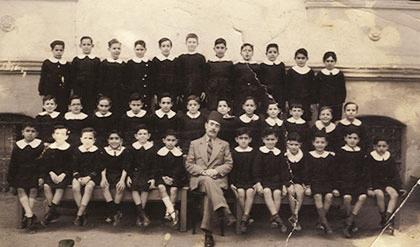

Jews who fled persecution in Egypt are “full blooded Egyptians”, declares Sharaf Al Deen.  The article describes at length their active role in Egyptian cultural and artistic life.  By emphasizing the cultural contributions, the author helps dispel the commonly held belief among many Egyptians that Jews were rich foreigners (khawagat) whose only contributions to Egypt was limited to the economic sphere at best.   

The article, however, contains serious historical errors.  It wrongly asserts, or at least implies, that prior to the Nasser era, Jews lived in total harmony.  While Jews in the twentieth centuries had cordial, warm and unforgettable relations with many other Egyptians, they still experienced suffering and exclusion long before the Nasser era, even long before Israel and Zionism.  
Historically and through the middle of the nineteenth century, they, along with Christians, were tolerated as Ahl el Zemma, or Dhimmi.  To be precise, they were shown condescending mercy provided they did not contest the inferior social and legal status imposed on them.  The Dhimmi status implied the prohibition from testifying against Muslims in court, the prohibition from bearing arms or joining the army, and dress restrictions.  Jews and Christians were also required to pay an extra poll tax, the guizyeh[2]. 
Shortly after Khedewi Said ordered the emancipation of Jews and Christians from the Dhimmi status in the middle of the nineteenth century, and cancelled the guizyeh, new and increasingly dangerous forms of marginalization and exclusion started to appear.  As far back as 1869, long before political Zionism was born, nationality decrees were interpreted so as to deny Jews Egyptian citizenship.  These decrees were consolidated into Egypt’s 1929 Nationality Law.   As a result, more than 90 percent of Egyptian Jews were denied citizenship, regardless of how many centuries they resided in Egypt.  The majority, or 60 percent, remained stateless (apatride or gheir mo’ayan lel genseyah), while others were able to obtain foreign documents.  Despite the enormous Jewish contribution to Egypt’s economy, employment laws implemented during the 1930’s and 40’s thought to deny Jews opportunities even in the private sector.  The most notorious of these laws was the 1947 Company Law, as a result of which a huge number of Jews, because they lacked citizenship, lost their livelihood[3].  

During the nineteenth and early twentieth centuries, accusations of ritual murders were also common in Egypt and other parts of the Arab world[4].  Nor was the article’s author made aware of the destruction of the Jewish synagogue in Cairo’s Darb el Barabra quarter on November 2, 1945, or the two massacres of Egyptian Jews that occurred during the Summer and Fall of 1948, shortly after the Egyptian army invaded Israel.  As many as 42 Jews were murdered, and many more wounded during these massacres[5].  No serious trial took place. 

Also unbeknown to the well meaning author are the incarceration and torture between 1967 and 1970 of nearly all Egyptian Jewish males, in the notorious detention camps of Abu Za’abal and Tura.  Nearly all were freed only on condition they leave the country, never to return; they were taken from prison to the airport without being allowed to see their homes, families, and neighbors[6]. 
It is rather disappointing and sad that Jews living in Egypt were unable to provide Sharaf el Deen with an accurate historical account of Egyptian Judaism; a strong indication that the dozen or so elderly Jews still in the country live in fear, a fear that many of us Egyptian Jews remember only too well.  We never dared discuss such matters in Egypt, and when pressured to talk to the press, Egyptian Jews had to claim that all was well. 

The more courageous individuals, however, would refuse to abide.  I recall for instance the time in 1969 when Mrs. Flore Marzouk, a member of the community who was volunteering her service at the Rabbinate, was asked to give an interview to Le Monde.  The security officer accompanying the correspondent to the Abbassiyah Rabbinate warned Mrs. Marzouk against any mention of the Jewish men imprisoned and tortured in Abu Za’abal and Tura.  The official let her know that she was expected to state that Jews are well treated in Egypt.  He also advised her that the correspondent should be made aware “that you are certain that both Moshe Dayan and Golda Meir (Israel’s defense and prime minister at the time), are criminals.”

That day, I was at the Rabbinate, now called the Jewish Community Center, delivering some food to be shipped to my brother and uncle at the Tura detention camp, and I recall how Mrs. Marzouk, with a mixture of determination, fear, and tear retention, flatly refused to talk to the correspondent from Le Monde under such conditions.  As a result, the security officer never allowed the correspondent into the Rabbinate.  Had he come in, the correspondent would have seen how incandescent with rage we all were at the suggestions of the security officer.

The article’s reader will quickly notice that courageous Jewish individuals like Mrs. Marzouk no longer live in Egypt.  This is indeed a shame for we do see courageous Moslems and Christians like Sa’ad el Din Ibrahim, Ali Salem[7], and Tarek Heggy[8], openly calling for good relations with the Jewish state and even praising Israeli democracy.  Even Ariel Sharon can hear good words from no less an Egyptian than President Husni Mubarak. The President of Egypt declared that only Sharon can bring peace, and, upon hearing of Sharon’s hospitalization, he called Israel and expressed concern[9].  What Egypt needs and does not have today is an outspoken, courageous Jewish community leader who can explain to Egyptians what happened to Egyptian Jews, and what Zionism and Israel mean to all Jews. 
Few Egyptians[10] are aware that, while Egypt’s government denied employment and citizenship to Jews living in the country for centuries, Israel offered them both upon arrival.  The largest percentage of Egyptian Jews, roughly 40 to 45 percent, fled to the Jewish state, while most of the other sixty percent or so spread to various English or French speaking countries, mainly the United States and France.   We therefore are grateful, and indeed morally indebted, to Israel, and to the other countries that support her and took us.
The absence of any honest discussion of taboo subjects like Israel or the fate of Egyptian Jewry only reflects poorly on the country.  Regrettably, in today’s Egypt, it is more common to hear Holocaust denial by high profile personalities like Mohamed Mahdi Akef, the leader of the Muslim Brotherhood[11].   And such criminal bigotry is not limited to fundamentalist circles.  William Fisher, who for a long time managed for the state department economic development project in Egypt and in the Middle East, despairs that even graduates of the American University in Cairo whom he considers Egypt’s future leaders, consider the Holocaust “an idea that's been pushed by the Jewish lobby in America.”[12] 
The sad irony is that such mindset constitutes an injustice not only to Jews who fled the country, but also to non-Jewish Egyptians who were tolerant to Jews.  For it definitely ought to be mentioned that not a few Christians and Moslems friends and neighbors were affectionate to the Jews they knew.  Our neighbors protected us from hostile elements in some neighborhoods like Abassiyah and Sakakini. They bought our grocery when it was too dangerous to step outside.  Our custodians would chase away harassers. 
The fondness that some Jews have for their former lives stems from such memories, and Egyptian Jews inside and outside Egypt have the moral obligation to act as a bridge of peace with Israel, a peace that an increasing number of Egyptian Moslems and Christians realize will benefit Egypt too.  Jewish spokespersons must also inform Egyptians and others about the massacres, the incarceration, the torture, and the years of persecution, if only to explain and acknowledge the deep loyalty and friendship of Egyptian Moslems and Christians who stood by their Jewish neighbors and friends.

Rami Mangoubi is a Jewish refugee from Egypt.  He holds a doctorate from the Massachusetts Institute of Technology and works as an engineer in the United States. 


[2] For an excellent account on the lives of Jews in the Arab countries, Iran, and the Ottoman empire since the Seventh century, see Bernard Lewis, The Jews of Islam, Princeton University Press, 1987.  The Dhimmi status is also discussed in Sanaa Hasan,Christians vs. Moslems in Modern Egypt, Oxford University Press, 2003.
[3] Shimon Shamir, ed., “The Evolution of Egyptian Nationality Laws and their application to the Jews in the monarchy period,” in The Jews of Egypt, A Mediterranean Society in Modern Times, Boulder: Westview Press, 1987, pp. 33-67.
[4] Bernard Lewis, p. 158. 
[5] Al Ahram, July 16, 1948, and September, 23, 1948. 
[6] I have personally lived through that period.  Michael Laskier, Egyptian Jewry under the Nasser Regime, 1956-1970,  Middle Eastern Studies, 31, (no 3: 1995), pp. 573-619.  See also Norman Stillman, The Jews from Arab Lands in Modern Times, Jewish Publication Society, Philadelphia, 1991.
[7] Ali Salem, A Drive to Israel – An Egyptian Meets his Neighbor, Syracuse University Press, 2003.
[9] “Mubarak Phones Olmert, wishes PM well”,  Ynet News, January 6, 2006.
[10] Rami Mangoubi, “A Jewish Refugee Answers Youssef Ibrahim,” Middle East Times, October 30, 2004.  Http://Www.Metimes.Com/Articles/Normal.Php?StoryID=20041030-025149-4018r
[11] “Leader of Egypt’s Moslem Brotherhood calls Holocaust a myth”, New York Times, Dec. 22, 2005.  Article found on Http://Www.Hsje.Org/Ldrislmstcallsholocaust.Htm
[12] William Fisher, “Why should We Be Surprised?,” Www.Billfisher.Blogspot.Com, posted on January 18, 2006.

Sunday, February 6, 2011

Egypt, Enslaved

Sat 5 Feb 2011
Dr Maurice M. Mizrahi
 (mizrahim@cox.net)
Congregation Adat Reyim
D’var Torah on Terumah


These days, every pundit and his uncle is a self-styled expert on Egypt, and will give you an in-depth opinion about what's going on there and what it means.  Me, I am not a pundit.  I am only an uncle.  Many times over.  But the rabbi asked me to do this and I figured, why not?  After all, I was born and raised in Egypt, until I was forced out in 1967, after the Six-Day War, when I was eighteen.  So I may be able to give you some insights.


To be sure, I have received many e-mails lately asking me to comment on the situation in Egypt.  I have done so in English, in French and in Italian.  I have not done so in Arabic:  Those who might write to me in Arabic have found their Internet feed cut in recent days.

In this week's Torah portion, Terumah, the Israelites have just gotten out of Egypt amid signs and wonders and miracles, led by God "with a strong hand and an outstretched arm" [Deut. 26:8]. They have just witnessed the spectacular giving of the Torah on Mount Sinai, and are finally settling down to more mundane tasks, such as building an ornate tabernacle to house the Tablets of the Law.

But the thundering words they heard at Sinai are still ringing in their ears, beginning with:
I am the Lord your God, who took you out of the Land of Egypt, the house of bondage. [Ex. 20:2]
Our commentators wondered:  Why does God describe Himself that way?  Would you not expect God to identify Himself by saying:
I am the Lord your God, who created the heavens and the earth?
This would make it clear that He is the Beginning, the Boss, the Adon Olam, the Master of the Universe.  After all, even lowly human beings can be great leaders and liberators, but only God can create a world, so shouldn't God stress this unique aspect of His being, just as He is about to give us the Torah?

One reason that comes to mind is that people, then as now, are afflicted with the "What have you done for me lately?" syndrome.  In other words, spare me the creation of the world -- that's ancient history -- and tell me what you have done for me lately.  So God anticipates that and obliges by saying: "OK.  I just freed you from slavery".

But our commentators saw beyond that.  They argued that if God had said only that He was the creator of the world, it might imply that he has distanced Himself from the world since then, and abandoned it to its own devices.  By saying "I just freed you from slavery", God tells us that He cares and watches over us as history unfolds.  He did not just create the world and withdraw.  He is here with us and His presence is all around us.  Yehudah Halevi, the 12th century Spanish Jewish poet, argues in his greatest poem, The Kuzari, that God is a "God of History", not just an abstract "God of the philosophers".  God is always present.

So God took the Jews out of Egypt and they are ready to begin a new chapter in their march through history, as a proud and free people.  But what about the Egypt they left behind?  Did it ever get free?  No, never.  To this day, it has always remained enslaved by masters foreign and domestic.  Are the Egyptians condemned to perpetual retribution for enslaving the Jews?  Or has their time finally arrived to "proclaim liberty throughout the land, unto all the inhabitants thereof" [Lev. 25:10], in the middle of the massive demonstrations in Cairo and Alexandria we have been watching on TV?

First, why should we care what happens to Egypt?  We are happy to be out of it, we are happy to be rid of it.  Our 601st commandment states,
Thou shalt never again dwell permanently in the Land of Egypt.
[Deut. 17:16; Deut. 28:68; Ex. 14:13],
a commandment that, sadly, I broke the moment I was born.  Yet we are commanded to remember Egypt every single day.  The Torah says:
Remember the day when you came out of the Land of Egypt all the days of your life. [Deut. 16:3].
The Talmud reinforced this message [Berachot 12b]. The Passover Haggadah adds that in every generation, every person must consider that he, himself, was personally rescued from Egypt.  (That’s easy for me to say.)  The Exodus from Egypt is highlighted at the Kiddush for every Shabbat and holiday eve:  Zecher litziat Mitzrayim.  Egypt is where we truly became a people, where we received the Torah.  We are not allowed to keep Egypt out of our collective consciousness.  We are linked to it, by proximity if nothing else. 

So what can we say about Egypt today?  Egyptians have a history of being passive, fearful.  They are afraid to speak their mind.  They may tell you in private what you want to hear, but in public they will go with the flow, out of fear.  You are never sure what they really think.  They fear their leaders and the police state that keeps those leaders in power.  What is happening now in the streets of Egypt is totally unprecedented in their 5000-year recorded history.  The people are demanding the ouster of their totalitarian ruler and are publicly reviling him, to his face, with astonishing vehemence.  This has never happened before.

Let us briefly review the history of Egypt before we proceed:
-First, the Pharaohs of Ancient Egypt were in charge, all absolute rulers with absolute power over the people.  The people, then as now, were mostly dirt-poor peasants.  The Pharaohs were backed by the priests, whose job was to scare the people into submission, by threatening the wrath of the many false gods that were worshipped.
-Recorded history can be said to begin with the Pharaoh Menes, who united Upper and Lower Egypt in 3000 BCE,   5,000 years ago.
-By the time Cleopatra ruled in the first century BCE, Ancient Egypt was already moribund.  It was conquered by Alexander-the-so-called-Great in 331 BCE.  He built the city of Alexandria in his name and image.  The Greeks -- or Ptolemies, as they called themselves in Egypt -- were the masters for three centuries. 
-Then the Romans took over from them for about four centuries. 
-When the Roman Empire split, the Byzantines took over Egypt in 395 and kept it for another three centuries. 
-Then Islam was born.  The foreign Arabs conquered Egypt in 639 and ruled it for six centuries, up to about the middle of the 13th century.  The Egyptians of today are mostly the descendants of these invaders.  The Ancient Egyptians morphed into the Christian Copts, and declined in proportion to become only about 10% of the population today.
-The Mamluks then took over Egypt in 1250 and held it for some three centuries.  They were former slaves from Russia and the Caucasus who converted to Islam.
-They were followed by the Turks, or Ottomans, for another three centuries. 
-Even Napoleon tried his hand at conquering Egypt.  He came in 1798, but gave up and withdrew, leaving a power vacuum.
-That vacuum was quickly filled in 1805 by an Albanian commander by the name of Muhammad Ali.  He managed to gain some autonomy from the Ottoman Empire and ruled Egypt ruthlessly as viceroy, along with his descendants, for a century and a half.  His descendants ruled under the colorful names of khedive, sultan, and finally king.
-In 1882, some thirteen years after the Suez Canal opened, the British invaded, ostensibly to protect the vital waterway and ensure the stability of the Egyptian dynasty.  They became the de facto rulers for many decades.
All this time, the poor Egyptian people watched their foreign masters, helplessly, licking boots and trying to survive by being as servile as possible.
-Then the 1952 revolution came and brought Nasser to power.  It was not a grass-roots event.  It was a bloodless palace coup.  The Army simply came and told the king, "Your time is up.  Get out!"  Nobody consulted the common people.  As expected, they cheered Nasser with the same gusto as they cheered King Farouk a few years earlier. 
It's true that for the first time since the Pharaohs, the Egyptians were now ruled by one of their own.  But ruled is the right word.  The new rulers proved to be every bit as totalitarian and oppressive as their foreign predecessors.  Democracy was never part of their vocabulary.  Maintaining themselves in power was their foremost concern.  There were only three rulers in almost sixty years  Nasser, Sadat and Mubarak  and the first two were stopped only by death, one natural and untimely, and one unnatural.  Nevertheless, human nature is such that, if you are going to be ruled with an iron hand, better that it be by one of your own than by a foreigner, so the Egyptian people felt better in that regard.

Most Egyptians are tolerant, good-natured, kind-hearted, and not fundamentally antisemitic. There are three centers of antisemitism in Egypt:  The Islamic fundamentalists, the intellectuals, and the Coptic Christians:
-The Islamic fundamentalists have always opposed peace with Israel and have vowed to abrogate the 1979 peace treaty with Israel if they ever get the chance. They support terrorists and view Jews in the most outrageously negative of terms, which I will not repeat here.
-The intellectuals are whipping up antagonism towards Jews and Israel through the media.  They know that if war comes, they can always get out of fighting on the battlefield by pulling the appropriate levers. They speak bravely of honor, as long as others do the fighting and the suffering and the dying.  The government has always given them free rein as a safety valve, as long as they do not criticize the totalitarian regime.
-And the Copts are stuck in a medieval interpretation of Christianity from which the rest of official Christianity has been moving away.  I remember shivers going down my spine when I heard the Coptic pope on the radio in 1967, right before the Six-Day War, when war frenzy was whipping up the masses.   He said, The time has finally come when the Jews will pay, and they sons will pay, for the crucifixion of Christ.  He spat out the word pay with great anger.
But the three of them together do not add up to a majority.  The Copts are only 10% of the population and are always at odds with the Muslim majority.  Clashes are becoming more frequent.  The bombing of a church in Alexandria last December, that left scores of dead and injured, is the last episode.  Numerically, the intellectuals are but frosting on the cake.  The Muslim fundamentalists are significant in numbers, some estimate 20%, but still a minority.  So there is hope for less hatred in the air, if the majority decides not to be silent anymore.

Corruption and nepotism are rampant and a way of life.  You may find that to get a driver’s license, you have to slip the examiner a fifty-dollar bill.  But thats not the worst part.  The worst part is that bad drivers are driving around.  If you want a good job, who you are and who you know are more important than what you can do.  But that’s not the worst part.  The worst part is that incompetents are frequently in charge of things.  All that is not likely to change soon.

So far the demonstrators have been careful to limit their demands to three things.  First, President Mubarak must leave immediately.  Second, a provisional government must quickly organize multi-party elections.  And third, these elections must be free and fair.  They were smart not to bring up Islam, or Israel, or the United States, or terrorists, or any other specific or divisive issue.  That should gain them international support.

So how do I personally see the future of Egypt?  First, to answer the earlier question I posed, no, Egypt is not under a perpetual curse.  The prophet Isaiah tells us that after much punishment Egypt will eventually see the light and be blessed. [Isaiah 19:1-25] But Isaiah does not say when that will happen. 

But back to the present.  I believe Mubarak will go, leaving his newly appointed Vice-President in charge of a provisional government that will organize multi-party election within six months.  A new government will be elected, more or less fairly, depending on how well the thugs and goon squads are kept out of the process, most likely by the Army.  Nobody knows who will emerge the victor, for the simple reason that no one has ever heard the Egyptian people express themselves in total freedom, in public or in private or at the ballot box .  I repeat, nobody knows who will emerge the victor, not even the Egyptians themselves.
-If the new government is Islamic, it's curtains for Egypt.  They are in for a long night, with Iran, Hezbollah, Hamas, and maybe even Al Qa'eda as its best friends.  Israel will have to prepare for war again.  And the Islamists will tolerate no second chance for democracy. 
-If the new government is secular, it will start out well, but as its term of office comes close to its constitutional end, its top priority will be to keep itself in power by hook or by crook, and they will be sorely tempted to slyly derail all opposition, as in the past.  As they say, the proof of democracy is in the second election, not the first.  At any rate, it will probably distance itself from Israel and make the cold peace even colder, if that is possible, to avoid angering the Islamists. 
-Corruption and nepotism will continue, as it is a cultural matter that cannot be eradicated overnight.  Whether the people will press continuously for transparency and accountability, or limit themselves to this initial burst, is anybody's guess.
As the Egyptians collectively decide their own future, for the first time in their long recorded history, they would do well to remember the promise made to Abraham in his very first encounter with the Divine:
I will bless those who bless you and curse those who curse you. [Gen. 12:3]. 
As history has shown repeatedly, that promise will be kept.  Whether it's the United States of America in the blessing, or Nazi Germany in the curse, or Spain in the blessing followed by the curse depending on how they behaved, that promise will be kept.  If the Egyptians choose to move in the direction of cursing the Jews, they may well find themselves right where they were before.

Or lower.

Sunday, September 19, 2010

Neilah

Sat 18 Sep 2010
Yom Kippur service
Congregation Adat Reyim
Dr Maurice M. Mizrahi


 -The Neilah is the concluding service on Yom Kippur. It was not always part of the liturgy.  It was introduced in Talmudic times (Jerusalem Talmud, Berachot 45a).
-Some 2000 years ago a certain Rabbi Levi said: God said in Isaiah 1:15:

Even if you pray profusely I will not answer, [because] your hands are full of blood.
úÇøÀáÌåÌ úÀôÄìÌÈä àÅéðÆðÌÄé ùÑÉîÅòÇ éÀãÅéëÆí ãÌÈîÄéí îÈìÅàåÌ âÌÇí ëÌÄé
-He concluded that if your hands are not full of blood AND you pray profusely you WILL be answered!  It’s a promise.  He turned the negative-sounding biblical verse into something positive.  So the Sages added Neilah to increase the chance that our prayers will be answered on Yom Kippur.

-50 years ago this minute, I was standing in Shaar HaShamayim synagogue in downtown Cairo, Egypt, where I grew up.  The people were tired, sleepy, hungry.  The prayers were down to a low monotone.  They did not want to hear about the origin of the Neilah service.  They wanted the Neilah itself.  Then came the Neilah song.  The transformation was something to behold.  All of a sudden, everybody woke up and started singing at the top of their voices, with great enthusiasm, with abandon and a feeling of liberation!

-What they sang was "El nora 3alilah", by Moses Ibn Ezra.  It’s on page 775b of the Enhanced Edition of the machzor.  If you don’t have that, it’s in the High Holy Day Supplement.  If you don’t have either, your response is to sing, every two verses:
El nora 3alilah, el nora 3alilah
Hamtsi lanu mechillah, besha3at hanne3ilah
which means:
God of Awe, God of Awe,
Grant us pardon at this hour when the gates are closing.
The first letters of the verses form an acrostic, "Moshe Hazzak".


Emacs!

El nora 3alilah

El nora 3alilah, el nora 3alilah
Hamtsi lanu mechillah, besha3at   hanne3ilah

M'tei mispar kru-im, lecha  3ayin  nose-im
Umsaldim bechillah, besha3at  hanne3ilah

Shofchim lecha nafsham, m'cheh  fish-3am  v'kha-chasham
Hamtsi em mechillah,  besha3at  hanne3ilah

Heye lahem lesitra, v'chal-tsem   mim-era
Vechat-mem  lehod ulgillah, besha3at  hanne3ilah

Chon otam verachem, vechol  lochets  v’lochem
3asseh vahem  p'lillah, besha3at  hanne3ilah

Zechot  tsidkat  avihem, v'chadesh  et  yemehem
Kekedem ut-chillah, besha3at  hanne3ilah

Kra na shanat ratson, vehashev sh'erit hatson
L'ahaliva  v'ahalah, besha3at  hanne3ilah

Tizku  l'shanim rabbot, habbanim  veha-avot
Beditsa  uv-tsahala, besha3at  hanne3ilah

Michael sar Yisrael, Eliyahu v'Gavriel
Basru  na  ha-geula, besha3at  hanne3ilah


The Sephardic greeting for the season is not “L’shanah tovah” but a line from the song we just sang:

Tizku l’shanim rabbot
May you merit many years

The response is:
Tizkeh v’tichyeh
May you merit and live

Thursday, May 6, 2010

A Lonely Levantine Shabbat

In Cairo, the once-crowded Shar Hashamaim is restored, but there are almost no Jews left to pray in it.


Special to the Jewish Week
Wednesday, April 28, 2010

david cowles, Ark at Ben Ezra, Cairo,1994.

I make it a point to go to shul on Saturday morning, and that wasn’t going to change when I found myself in Cairo last summer. Yes, it is in an Arab country, but it is my Arab country, where I was born and where of late I have found myself traveling again and again. There is no one there for me — the 80,000 Jews who once lived in Egypt are pretty much gone, as are all my relatives. Cairo, to paraphrase Janet Flanner, was yesterday.
While at a festive gathering at the home of the United States ambassador, I asked if there were services I could attend that coming Saturday. Everyone shrugged, but then the head of Egypt’s virtually nonexistent Jewish community, Carmen Weinstein, spoke up to say there was certainly a place where I could pray, and I thought I detected a certain edge in her voice.
I could go, she informed me, to the magnificent central synagogue, Shar Hashamaim — The Gates of Heaven. My parents were married there back in World War II, and I have always had a romantic attachment to it. When I’d first returned to Egypt in 2005, I saw little beauty in the careworn massive stone building. Like most of the synagogues in Cairo, it looked like the house in the Addams Family: dark, frayed, forbidding.
But since that time, Weinstein had overseen a major renovation, encouraged and embraced by the American Jewish Committee, to restore the temple to its former splendor. Hundreds of thousands of dollars were apparently spent by the Egyptian government to fix it up, and there’d been a formal ceremony marking its reopening. The Gates of Heaven has no rabbi and no regular minyan, but come certain holidays, the handful of Jews who remained in Cairo, many quite elderly, venture out and reunite in the sanctuary.
One Saturday morning last June, my husband and I made our way to downtown Cairo, the hub of what had once been an intensely glamorous city; the synagogue had been situated steps from delightful patisseries, fashionable department stores, cinemas and boutiques. But, of course, that was when Jews and a multitude of Europeans — French, Swiss, Italians, British and Belgians — made Cairo one of the most cosmopolitan cities in the world. Since these “foreigners” were thrown out or forced out, Cairo had become hopelessly provincial. The elegant stores gave way to cheap emporiums. And the Gates of Heaven was essentially abandoned — there were no Jews left to pray. 
I spotted a small, armed militia outside the temple’s doors. They looked suspiciously at us, but I was ready for that: Egypt likes to post armed guards outside all its Jewish sites no matter how dusty. Gotta give them credit. How many other Muslim countries protect their Jewish sites with such diligence? Once we showed our passports, we were free to enter.
The synagogue was poorly illuminated, but it was clear much work had been done to restore it to its original splendor. The marble steps leading to the Holy Ark were gleaming. And the wooden pews that once accommodated hundreds of worshippers had some of their original luster. On the bima, I saw an open Torah scroll. 
There were all the elements of a great synagogue except one: people.
I went up on the bima and put my hand on the scroll. Then, I climbed the marble stairs and kissed the velvet curtain that covered the Holy Ark. I looked around me, unsure what to do next. 
I felt excruciatingly lonely. Though I have prayed the Sabbath morning prayers a thousand times, I didn’t feel I could recite them anymore, not without the soothing voice of a rabbi or a cantor or fellow worshippers. It all seemed heartbreakingly pointless.
The Gates of Heaven had once accommodated several hundred worshippers, and its women’s section upstairs alone had scores of seats. I had been told the strict separation between men and women only encouraged romance; young men would stealthily look up as pretty girls dressed in their loveliest clothes would preen as close to the balcony as possible, to make sure they were noticed by their intended. There were flirtations and matches and fateful encounters, every Shabbat.
I grabbed a prayer book and flipped to the page of the Amidah, the silent devotional, and prayed quietly. Then, after taking one last walk around the empty sanctuary, I picked up my passport from the guard in the booth, took my husband by the hand, and left. 
I could think of nothing more to do on this lonely Levantine Sabbath. 
      *     *    *     * 
In the last couple of months, we’ve heard that Egypt is repairing more synagogues; indeed, that they expended funds to restore the most venerable temple of all, Rav Moshe, in the Old Jewish Quarter, where Maimonides was said to have studied and prayed some 800 years earlier. Egyptian Jews, myself included, regularly went to Rav Moshe when they were sick, hoping to be healed. I traveled to Cairo again last month to visit Rav Moshe and was impressed by the meticulous restoration. The Egyptians have also begun work on a broken-down Karaite shul and vowed to renovate some other once-grand institutions.
It all has seemed pretty wonderful to me — an Arab country faithfully restoring its Jewish institutions? It was as if my most fervent wish was coming true. Or was it? Is fixing up the empty, abandoned Jewish properties in countries devoid of Jews really worthwhile?
Looking back at my less-than-transcendent experience at Shar Hashamaim, I wonder if what I did had any meaning. Perhaps I could have communed with God nearly as well by staying in my room at the Marriott and davening there. It would have been more cheerful.
In Philadelphia, Rabbi Albert Gabbai of Congregation Mikveh Israel, who was born in Egypt and even sang in the choir of Gates of Heaven as a child, echoed the view that repairing it and other synagogues is essential — if only to remind the world, he says, that once upon a time Jews were there and in substantial numbers.
Since he left Egypt decades ago — after spending some years in prison camp, which is what happened to Jewish men who lingered — Rabbi Gabbai has had no desire whatsoever to go back, except to his synagogue, except to Gates of Heaven. He embraced my decision to pray there. “It means that you are reclaiming the place for Jews — for you as a Jew, and for all the Jews — [saying that] it belongs to them.”
Not everyone would agree. Rabbi Gerald Skolnik of the Forest Hills Jewish Center casts a tepid eye on efforts to refurbish synagogues in places where there are no Jews; from Poland to Egypt, he wonders what is the point other than to attract tourist dollars. 
“Is it better for a synagogue to be rehabilitated instead of being torn down or made into a mosque? Halachically, yes. But what is sadder than seeing an empty synagogue?”
Rabbi Elie Abadie, who presides over the Edmond J. Safra congregation in New York, staunchly argues in favor of restoring these lost synagogues. As a native of Lebanon, he has suffered the heartbreak of watching grand houses of worship destroyed or converted or sold or abandoned — as most were in and around Beirut. He passionately believes that the governments that drove out their Jews “have the financial and ethical responsibility to restore the synagogues.” 
As for my woebegone feeling on that Cairo Sabbath, he says, “If a person is praying in a synagogue — albeit empty — those prayers are at a higher level and more meaningful because the synagogue maintains its sanctity. Even if there is no minyan [quorum of 10 men] the prayers are at a higher level,” Rabbi Abadie contends. God, he says, was of course there in the original Great Temple, and then in the Second Temple. “Once the Temple was destroyed, its sanctity was transferred to all synagogues all over the world,” he said. When a synagogue is built, he said, “it is believed that God enters it and remains there,” till eternity. 
I found comfort in hearing that while I may have felt desperately alone that Sabbath morning, God was indeed there beside me in that great cavernous space in Cairo. 

Monday, April 12, 2010

ISRAEL-EGYPT GALA EVENT– 12 March 2010

Celebrating 30 Years of activity of the Israel-Egypt Friendship Association
1980-2010

and 31 Years of the Israel-Egypt Peace Treaty – signed on 26.3.1979


Report

Levana Zamir, President of the Israel-Egypt Friendship Association, with Minister Silvan Shalom (right), Vice-Prime-Minister, and H.E. Barakat Ellessi, Egyptian Embassy Israel.
Tel-Aviv, March 12th 2010.


The Gala Event was held at the Einav Center in Tel-Aviv by the Israel-Egypt Friendship Association, in cooperation with the Egyptian Embassy in Israel, the Menahem Begin Heritage Center and the Municipality of Tel-Aviv.
Attending this successful and joyful event were some 350 participants, representatives of the Ministry of Foreign Affairs, Ambassadors and delegates of 28 foreign countries in Israel, the Academy, and many Jews from Egypt who enjoyed gathering at this much elegant festivity.

Attending this successful and joyful event were some 350 participants, representatives of the Ministry of Foreign Affairs, Ambassadors and delegates of 28 foreign countries in Israel, the Academy, and many Jews from Egypt who enjoyed gathering at this much elegant festivity.

Levana Zamir, with 3 former Ambassadors of Israel to Egypt: Prof. Shimon Shamir (right), Shalom Cohen and Zvi Mazel. 30 years of activities in a 16-minute movie:

The highlight of this event was a dynamic movie of 16 minutes, presenting the many and important events and achievements of the Israel-Egypt Friendship Association during 30 years of activities in Israel and Egypt, ebbing and flowing to the historical
waves of "cold or warm peace".
After this successful event, we received many emails
of appreciation. Here is one received
from Andrew C.Parker, Consul General of the
United States of America Embassy:

Dear Mrs. Zamir,
Thank you for making it possible for us to attend your event today. It was an honor to
participate in an event marking such an important milestone in the history of both Israel and Egypt.

Regards,
Andrew C. Parker
Consul General
U.S. Embassy Tel-Aviv.

The guests of honor presented their speeches during the event, very shortly.
Here below some "pearls" from those speeches:

Herzl Makov, Director General of the Menahem Begin Heritage Center
The Peace Treaty between Israel and Egypt is the second most important historical event after the proclamation of the State of Israel and the Liberation of Jerusalem.
Sadat and Begin ‘s achievement should be remembered and learned from.

H.E. the Ambassador of Egypt
Since the signing of Peace between Israel and Egypt, our relations are developing steadily and constantly. This is the logical result of the Sadat and Begin initiative. President Mubarak is always calling for peace in the region, which suffered so much. As we celebrate Peace today, so let us work to create the proper environment for peace.

Nathan Wallach – Tel-Aviv Municipality
The normalization process is long and difficult, with many obstacles. But both sides know that Peace between our two countries is of strategic importance. Commercial ties are forming and there is no doubt that the Israel-Egypt Friendship Association is playing an important role in fostering closer relations for a dialogue between the two countries.

Silvan Shalom, Vice Prime Minister
Egypt being the major power and the leader of the entire Arab world, it was very important that the first Peace Treaty was signed with Egypt. By so doing Egypt said to the whole Arab world that Israel is here, and Israel is here for ever.
We should learn from 1977 that direct negotiations work and avoid time-wasting.

Professor Shimon Shamir – Tel-Aviv University and former Ambassador of Israel to Egypt:
I believe that Israel-Egypt peace is a remarkable success story, achieving what the architects of peace had in mind: no more war, no more bloodshed.
Today, there is a convergence of interests between Israel and Egypt: both of them want stability in the region, both of them are threatened by extremists and terrorism, both of them are worried by the ambitions of a neighboring regime which aims is to destabilize them.
These shared interests are the solid foundation of our relations, serving the purposes of both countries. People like Levana Zamir and her colleagues at the Israel-Egypt Friendship Association are playing a very important role in developing those shared interests, through friendship between the two societies, leading to peace in the region.

Levana Zamir – President of the Israel-Egypt Friendship Association
After more than 30 years of Peace with Egypt, we should be looking ahead. As early as in 1939, our first Prime Minister David Ben-Gurion advocated a Middle-Eastern Confederation including a Jewish State. In the third millennium, when Europe, rising from the ashes of WWI and WWII, is merging into one entity, Ben-Gurion’s dream is not a delusion. The multicultural and cosmopolitan Jews of Egypt could be a bridge to achieving this aim.============

Sunday, April 11, 2010

The Assertion of Egyptian Jewish Identity

http://publishing.cdlib.org/ucpressebooks/view?docId=ft2290045n&chunk.id=s1.8.52&toc.depth=1&toc.id=ch8&brand=eschol;query=historical%20society%20of%20jews%20from%20egypt#1


People who began their political lives as Marxists probably never imagined they would be involved in a struggle to preserve the remnants of the Jewish cemetery at Basatin, a suburb of Cairo on the road to Ma‘adi, a project with religious overtones and no apparent “practical” value. But the ASPCJE contributed hundreds of thousands of francs to finance the efforts of Carmen Weinstein, one of the few remaining active Jews living in Cairo in the 1990s, to construct a wall around the cemetery and engage a guard to protect it from squatters.[28] I met Carmen Weinstein in Jacques Hassoun's home in Paris in 1994. Though both are secular Jews with little attachment to orthodox religious observance, they were united by a fierce determination to preserve the cemetery as material evidence that a Jewish community had lived and flourished in Egypt.

Egyptian Jews in the United States also began to organize themselves in the late 1970s and early 1980s. I discussed the organization of the Karaite Jews of America in San Francisco in Chapter 7. A Rabbanite Egyptian Jewish community settled in Brooklyn, New York, following the 1956 Suez/Sinai War. Some of its members, especially those of families who came to Egypt from Aleppo in the nineteenth century, assimilated to the larger and previously established Syrian Jewish immigrant community. In the late 1970s, Egyptian Jews in Brooklyn established the Ahaba ve-Ahva synagogue, which practiced the Egyptian liturgical tradition.

In October 1995, a group of Egyptian Jews gathered at the Ahaba ve-Ahva synagogue to initiate the formation of the Historical Society of Jews from Egypt. Their objective was to record and preserve their cultural heritage, the same purpose that motivated the formation of the French ASPCJE. Among the leading activists in this initiative with some previous public exposure were Victor Sanua, a research psychologist who has gone beyond the boundaries of his field to publish historical articles about Egyptian Jews, and Mary Halawani, an independent film maker whose short documentary, I Miss the Sun, records her grandmother's fond memories of Egypt.[29] The society began publishing a newsletter, Second Exodus, and organized a series of lectures in private homes. This form of ethnic organizing has been quite common and acceptable in the United States, so it is remarkable that it has begun so recently. The leading individuals had been in contact with Jacques Hassoun and the ASPCJE and were obviously inspired by that example; but the New York group was organized several years after the demise of the French association, and its leading members did not share the same political commitments.

These associations have had modest and limited success as institutions; a certain kind of failure is inherent in the nature of such activity. The Jewish community of Egypt is nearly extinct, and there is little prospect for its revival in the foreseeable future. Those who remember their lives in Egypt are gradually passing away. Most of their children, even those who maintain some level of curiosity and engagement with their parents' heritage, have become assimilated to the dominant cultures of Israel, France, and the United States.

Therefore, examining the revival of Egyptian Jewish identity associated with these institutions cannot be an effort to map out a coherent cultural or political alternative. Rather, it is an excursion into memories and current sensibilities that have not found adequate space for expression in the brave new world of national states in which Egyptian Jews have found themselves after their dispersion. I have argued that the Egyptian-Israeli peace agreement altered the insistently negative images associated with Egypt sufficiently to allow Egyptian Jews to begin the process of recalling and reconstructing their past and representing it to themselves, their children, and the public. In the remainder of this chapter, I elaborate this argument, focusing on the post-1977 literary production of Egyptian Jews living in Israel.

Wednesday, April 7, 2010

OUR PARENTS, THE REFUGEES


“We left. And we lost everything. We lost the business, the manufacturing shop, a very beautiful villa with a garden full of orange blossoms and lemon blossoms that I can still remember. But I did take with me a Star of David. It was made by my grandfather. Luckily I was able to get it out. And luckily, the Egyptian authority didn’t search me, because if they had, they would have pulled it from my neck.”

So recounts Joseph Abdul Wahed, a resigned, saddened old man and former refugee from Egypt. His story is one of many told in The Forgotten Refugees, and among the hundreds of thousands of stories of loss and displacement, of uncertainty and pain that nearly one million Jews were subjected to after 1948. But in spite of the huge number of people involved, these stories are rarely told.

Discrimination in Arab Lands

I attended the award-winning David Project documentary aired by the Edmond J. Safra Synagogue, expecting to learn about a subject I knew nothing about. But I walked out changed. Changed by the raw emotion of the film’s participants—the breaks in their voices, the wrinkles cutting grooves in their faces, the soft, quiet strength emanating from each and every one of them. Coming on the heels of Yom Hashoah, it was shocking to learn that Hitlerian discrimination was rampant long before the Holocaust began; that before concentration camps like Auschwitz and Dachau were ever built, Jews were being interred in huts, driven from their homes, stripped of their assets and forced to start a new life with not even their personal identity intact.

Every year, we commemorate the six million Jews, 1.5 million of who were children, murdered in Nazi Germany—as we should. But not until recently have the stories of the Jewish Refugees from Arab countries garnered much attention. They are all but forgotten, and, when word of this documentary circulated, many of them came forward of their own volition, grateful that an organization was finally going to act on their behalf.

That organization was The David Project Center for Jewish Leadership, a non-profit group dedicated to educating and inspiring strong voices for Israel. The association teamed up with Ralph Avi Goldwasser and Israeli director Michael Grynzspan of IsraTV to produce this invaluable film, The Forgotten Refugees. Spurred by the anti-Israel sentiment permeating college campuses, they worked to shed light on an oft-neglected chapter of our nation’s history.

“In talking to students,” said Goldwasser, “I realized that most Americans, including Jewish Americans, don’t know that most of the people in Israel are…actually Mizrachi and Sephardic from the Middle East and North Africa. And that triggered the need to educate.” Ignorance was thus the main catalyst for this film, a desire to bring this neglected piece of history to the fore and enrich our cultural awareness. Few of us properly appreciate our origins and heritage, or realize that until 1945 approximately one million Jews populated the Middle East, building their lives in Lebanon, Tunisia, Iraq, Syria and other countries. Each of these countries boasted a prominent Jewish community—Iraq, formerly Babylonia, was where the Talmud was written—and each has its own story of exodus and destruction.

“We wanted to focus on the good, the bad and the ugly; the historical and the personal,” says Goldwasser. “We’re trying to show that Jews lived in Arab countries under some very difficult circumstances for thousands of years. It wasn’t all a golden age. Minorities in Muslim countries suffered.”

Massacre in Libya

I ran and they were chasing me until they caught me. They beat me up until they got tired of it. They wanted to cut my arms and legs. And my head too…with axes. Then they got tired. They thought I was dead.

This is the testimony of Yizhak Dvash, a survivor of the 1945 Libyan riots in which 130 Jews were massacred. In the film, a close-up image shows his hand, slashed and stitched back together. Yizhak looks upon his hand, frowning, distraught by the reminder permanently etched upon his skin—that meaningless hatred not only exists but mangles lives.

Lydia Hayoun, another survivor, squints her eyes while speaking, as if to shield herself from a vision that is too vivid even today: “The Arab rioters killed and burned. They stormed houses, killing, destroying and plundering. And we were so scared…”

Her voice trails off as if she still hasn’t found her way, as if she’s still lost trying to contemplate such horror. Indeed, it was more than horror that took place in Libya; it was akin to genocide. In a country that once had 38,000 Jewish residents and a thriving Tripoli Synagogue, no Jews remain.

The 20th Century Egyptian Bondage

Following the Six Day War, Jews in Egypt were arrested and put in concentration camps. They were forced to live in huts, surrounded by dust and exposed to the harsh elements. They also lost their jobs. The Egyptian Companies Law of 1947 required that 40 percent of every company’s directors and 75 percent of its employees be of Egyptian citizenship, resulting in the dismissal and eviction of all Jewish residents who weren’t citizens. It was common for Jews in the region to hold foreign citizenship, so the majority of Egypt’s Jews were subject to this law, and scores found themselves unemployed.

Caroline Shushan’s parents were French citizens living in Egypt in 1956 when they were suddenly, without warning, expelled from their homes. “They had 48 hours to leave,” she recalls. “They were a little confused, obviously. My mom was young; she had two little kids.”

The forced eviction took place at the time of the Suez Crises, and Caroline suspects that her family was targeted mainly because they were citizens of France—an enemy country. The war certainly exacerbated the circumstances, doubly crucifying Egyptian Jews —not only because of their religion but because of their loyalties.

“They had nothing.” Caroline laments. “One suitcase—no jewelry, no money. Nothing, really, just some clothes.”

They flew to Switzerland—a rare mode of escape as most people went by boat—and stayed with her mother’s uncle. Interviewed as one of the first refugees to come out of Egypt, her father told the authorities in Switzerland, “We just did what they said.” Unaware of just how bad the circumstances were, Caroline’s parents never truly believed they were the targets of anti-Semitism, but were worried about the random and injudicious imprisonment of Jews believed to be Zionists. People with Israeli connections were put in internment camps (which were not at all a German creation) in an effort to provoke fear and elicit confessions. Several of the Shushans’ friends, including her mother’s cousin, were sent away.

The Shushan family has expended enormous effort to seek reparations, without success. They have found themselves unwelcome in Egypt, and their trips to the country are fruitless. Sadly, there are hardly any Jews left in an area that was once bursting with them. Levana Zamir, another refugee, lamented, “We could say that the Jewish community in Egypt is not anymore. It’s finished. Vanished.”

A Long History of Persecution

Film narrator Eliana Gilad estimates that the oppression of Jews in Arab lands began as early as 622, with the creation of Islam and the Arab conquest of the Middle East. Jews under Arab rule were assigned the status of “dhimmi,” which literally means “protected people,” but in actuality translated into anything but protection. The Jews were guaranteed to have their lives spared in the event of war, but on the condition that they would never attempt to outdo their Muslim neighbors, and would always remember their place as lower class people. Jews could not ride horses and put themselves higher than Muslim pedestrians. They could not build new synagogues, and the ones that were established had to be lower than the mosques. Houses, too, had to be low to the ground and Jews even had to wear yellow patches on their clothes. The adornment of the Jewish Star—like so many other anti Semitic measures—was not a Nazi invention and actually existed as early as the 7thcentury.

Fast forward through centuries of dhimmi oppression and a fair number of blood libels, to modern times when Jews living in Muslim dominated Middle Eastern countries approached the one million mark. In the early 1930s, Arab nationalists rose to power and gave vitriolic speeches which focused primarily on blaming the Jews for the country’s ills. In Iraq, a pro-Nazi government was established. The Grand Mufti of Jerusalem, Haj Amin Al Husseini, met with Hitler and discussed plans to create a “final solution” to the “problem” of Jews in the Middle East. “Arabs rise as one man and fight for your sacred rights,” he pronounced on a Nazi radio station. “Kill the Jews wherever you find them!”And kill they did, rioting through the Jewish ghetto, pulling babies apart by their limbs, raping women in front of their families, and robbing Jewish houses while the owners ran from rooftop to rooftop trying to escape.

“I listen to Iraqi music,” says Linda Abu Azziz. “I read in Arabic, I cook the same food… so I’m very much Iraqi—and this is the problem. Because on the one hand I have a lot of affection for the Iraqi people, but on the other hand I am very much hurt by what happened to us in Iraq.” Linda’s conundrum was shared by many Iraqi Jews, who lived in a place they considered home but where life had become unbearable.

Mordechai Ben Porat, proud founder of the Babylonian Jewish Heritage Center, walked to Jerusalem by foot in 1945 and then helped 120,000 others follow him. “I came to the decision that that country wasn’t our country, and we had to leave,” he says.

In the Shadow of the Arab-Israeli Conflict

Fortuitously, there was a Jewish country in the making and, in 1948, Jewish refugees began coming to the fledgling State of Israel where they believed they would be safe. But for those who remained behind, the creation of a Jewish state further infuriated the Muslim world, leading to more massacre and distress.

“When Israel was created, it unshackled the Jew,”explains Joseph Abdel Wahad.“And for the Arabs and Muslims it was unacceptable for the Jew to be independent—because for fourteen centuries, the Jews were under them.”

The film briefly shows snippets of a May 16, 1948 headline from the New York Times entitled, “Jews In Grave Danger In All Moslem Lands.” The article details the persecution that spanned every sector of the Middle East once Jews gained their independence. Jewish bank accounts were frozen and used to finance resistance to the Zionist cause, Jews believed to be active Zionists were imprisoned, and the Iraqi government did not allow any Jew to leave the country without first paying an enormous sum as collateral. Jews in Syria began suffering even before the State’s creation, with the UN Partition Resolution of 1947. Mobs began rioting in Aden and Aleppo, and Jews were stripped of their jobs. The government also denied Jews freedom of movement, making it nearly impossible for them to leave their ravaged country.

A Personal Survival Story

Rabbi Elie Abadie of the Safra Synagogue is the child of survivors of the 1947 Syrian riots. The mobs—aided by police the Jews had once trusted—began burning synagogues and sifrei Torot in what became known as the harayik. One day, rioters entered the building in which Rabbi Abadie’s parents lived. Within minutes, Mrs. Abadie heard shrieks of terror. “They were beating Jews, destroying their property, looting stores, ruining businesses,” she recalled.

Escape was risky. Syrian police patrolled the border and imprisoned Jews who were caught trying to cross. Some were daring enough to bribe a well-connected official or walk outside the border where no one would see them. But many of these attempts were unsuccessful, and resulted in death, torture or incarceration. Rabbi Abadie’s parents hid in his grandparents’ house, and a few days later they made separate attempts at escape. His mother obtained a doctor’s permit and took her sons to the Lebanon Mountains, but his father was unsuccessful after several attempts to escape Syria. In one instance, he was caught by a Syrian guard whom he happened to know. The guardsaid, “The authorities are after you because you’ve tried to escape several times, and I have orders to arrest you. I’m coming back to arrest you tomorrow.”Mr. Abadie understood the hint, and the very next day, with the help of some friends, he boarded the train to Lebanon. A train official with whom he was acquainted hid him in the cargo hold, warning that if he would sneeze or move a muscle they’d both be caught and killed.

His father hid there silent and motionless for hours, his fear intensifying once the train reached the border. The police conducted a thorough search of the cargo. When they came to his wagon, he was certain he’d be discovered. Miraculously, the guard was distracted and moved on to the next wagon.

As soon as the train crossed the border, Rabbi Abadie’s father jumped off the moving train and into a ravine. Somehow, he landed safely, suffering only minor bruises. He began walking through the Lebanese terrain in search of his family, traveling by night so as not to be seen. Eventually, he found his wife and children. They were entirely unaware of his escape, and were stunned when he walked through the door.

Stories of separation and reunion were not uncommon during those tumultuous times. Families were never allowed to leave the country together, as stray family members were seen as insurance that the deserter would return. For one man, his family’s decision to leave Syria in the seventies in favor of a more progressive country—namely the United States—meant a year and a half separation from his mother. He and his father ventured ahead, while his mother, brother and sister remained behind in Syria, awaiting nothing short of a miracle. He was just seven years old while this upheaval was taking place and was painfully uncertain of what was going on—if his mother would ever come, if they would have to return, or if his family would just remain separated forever. Finally, after enormous bribes were paid, connections tapped, and begging levied, his mother was allowed out of Syria.

In 1992, under pressure from many fronts, Bill Clinton issued a mandate requiring the release of the rest of the Syrian Jews as part of a deal with President Assad. Many migrated to the United States, Israel, and other friendly countries.

Bringing Their Plight to the Fore

Though The Forgotten Refugees has received a good deal of attention in recent years, the producers hope that this is just the beginning. It has been translated into six languages and was presented last February at the prestigious Herzliya Conference. It’s been shown to the U.S. Congress; Israeli government ministers; the U.N. Human Rights Commission in Geneva; and the British Parliament. On March 31, 2008, the first-ever Resolution recognizing the rights of “The Forgotten Refugees” was adopted by the United States House of Representatives. The Resolution asks the President to ensure that, when the issue of Middle Eastern refugees is discussed in international forums, any explicit reference to Palestinian refugees must be matched by a similar explicit reference to Jewish refugees.

Still, not enough is being done to remember and address the claims of the Jewish refugees. After the screening, the Honorable Irwin Cotler addressed the crowd to contextualize the documentary, point out its lessons and advocate for change. Professor Cotler, an international human rights lawyer and scholar, is a member of the Canadian Parliament and a former Justice Minister and Attorney General. He is a founding member of Justice for Jews of Arab Countries and has worked tirelessly on behalf of this cause.

He recalls his father teaching him the verse, “Sedek, sedek, tirdof – Justice, justice shall you pursue.” Cotler has lived his life by this precept, focusing special attention to this missva. In the 1990’s, he challenged the oppressive Syrian regime and flaunted his talit in the streets. He was never allowed back in the country, but is confident his point was made.

“We have to appreciate that while justice has been delayed, it can no longer be denied,” Cotler said in his address to the audience. “This is a truth that is not known; it is a truth that needs to be heard.” And not just heard—but acted upon. Cotler listed four valuable lessons to be taken from this atrocity, including the danger of state-sanctioned incitement to hate and genocide. He denounced the forgiveness of other countries who have the power to make a difference but have ignored the cruel reality taking place. We can no longer exculpate the villains of history, he insisted, protecting people like Ahmadinejad and inviting them to be guests at international forums. We have to understand the Jewish refugee story for what it is—a forgotten people, a forced exodus and the ethnic cleansing of entire communities. These people are the innocent victims of injustice and addressing their claims is a key requisite in the pursuit of lasting peace in the region.

Cotler poignantly described the chain reaction that needs to take place: “If there is no remembrance, there is no truth. If there is no truth, there is no justice. If there is no justice, there will be no reconciliation. And if there is no reconciliation, there will be no lasting peace towards which we all work and pray.”

“There are refugees other than the Palestinians,” says Mr. Goldwasser. “There were people who were dislocated as a result of war and conflict—and they’re totally invisible. Why isn’t the mainstream media talking about [them]?”

“We don’t want to be forgotten anymore,” insists Mr. Wahed. “We want to tell our story!”

Both the producers and the victims hope that by spreading awareness of the refugees’ plight, we can begin to seek justice for one of the largest ethnic expulsions in modern history. As one woman exclaimed, “The Arab governments have taken away our homes. They have taken away our culture. They have destroyed our communities. But they can never take away our spirit to fight for justice.”

To organize an educational screening of The Forgotten Refugees film, e-mail The David Project at sg@davidproject.org. Contact jp@davidproject.orgto learn more about the Project’s Forgotten Refugees curriculum for middle school and high school students.


http://www.communitym.com/article.asp?article_id=100681&article_type=100007


footer

HISTORICAL SOCIETY OF JEWS FROM EGYPT © 2018 All Rights Reserved.
Historical Society of Jews From Egypt is a not-for-profit organization recognized as tax-exempt under Internal Revenue Code section 501(c)(3).